 An official website of the United States government


Clarifying Percent Effort and Support for Career Development (K) Award Recipients
For most career development (K) award programs, the designated project director/principal investigator (PD/PI) (K award recipient):
- Must commit at the minimum 9 person months, equivalent to 75% full-time professional effort, directly to their research project and career development activities.
- Can devote the remaining effort (up to 25%) to additional research, teaching, clinical work, or other efforts complementary to their career development
NIH provides some salary support as part of the K award. Often institutions will supplement the salary of these K award PD/PIs up to a level that is consistent with the institution’s salary scale.
Salary supplementation is allowable for the K award recipient’s time spent devoted to the career development award and directly related to the research project, but must:
- Be from non-federal sources, which can include institutional sources
- Not require extra duties or responsibilities that would interfere with the goals of the K award
K award recipients may receive compensation for other research projects for the portion of effort not required for the K award (typically up to 25%). These projects may be federally or non-federally funded, and the awardee may serve as a PD/PI or in another role, provided that the aims of the other projects are distinct from those of the K award (see Figure 1). K awardees may also be compensated for effort devoted to teaching or clinical activities.
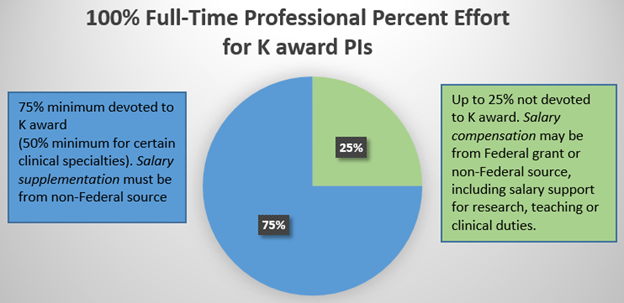
Figure 1: Salary supplementation and compensation during the entire period of K award (up to 5 years)
Most NIH K award mechanisms are mentored career development awards. Under these awards, an experienced faculty mentor provides structured guidance and oversight to support the recipient’s development and transition to independence.
On mentored K awards of a 3–5-year duration, NIH policy provides a transitional period to permit the K award recipient to apply for an R grant and, if awarded, reduce effort on their K award. If the K award recipient becomes a PD/PI of a peer-reviewed research award from NIH, another federal agency, or non-federal sources during the final two years of their K award, they may reduce the effort on the K award project from a minimum of 75% to a minimum of 50%. Once the new research grant is awarded, this reduced effort on the K award may be replaced by effort and corresponding salary from the research award. This means the combined total research commitment of the PD/PI remains 75% or more for the duration of the mentored K award (see Figure 2).
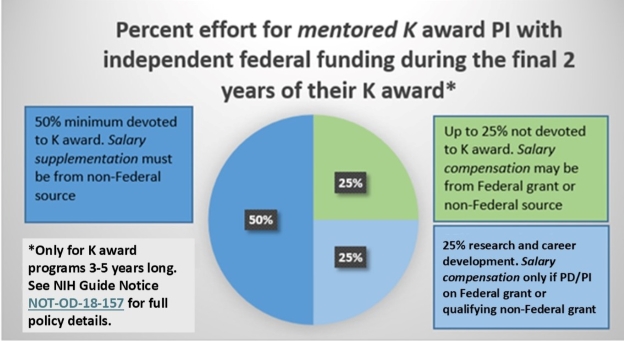
Figure 2: Reduced effort during the final two years of a mentored K award
Have additional questions about percent effort and K awards, or for a specific K award PD/PI at your institution? Contact the grants specialist listed on the notice of award for guidance specific to you. You can also view more information on IC funding considerations and contacts on the Individual Career Development Funding Considerations and Contacts webpage.
This post was adapted from a previously archived NIH Extramural Nexus article on the topic.
Questions: [email protected]
*This post was updated on June 17, 2026.