 An official website of the United States government


Explore the NIH Data Book — New Fiscal Year 2025 Updates and More Are Underway
The NIH Data Book remains a central resource for transparent, accessible information on NIH funding, peer review, and the NIH-funded research workforce. Fiscal year (FY) 2025 data are currently being rolled out in the Data Book, ensuring users have access to the most recent information available.
The Data Book organizes information into topic-based dashboards that allow users to explore data for specific fiscal years and trends over time. A navigation menu on the left lists topic categories, while the dashboard area on the right displays associated charts. Individual charts can be expanded using the arrow in the upper right corner.
Many displays are interactive. For example, when hovering over the individual data point for FY 2025 on the “Research Project Grants: Funding, by Institute/Center” chart, it shows that NIH awarded more than $26.5 billion in Research Project Grants in that time frame (Figure 1). Users can click on one or more of the individual Institute or Center (IC) bars at the top of the chart to display corresponding IC-specific information.
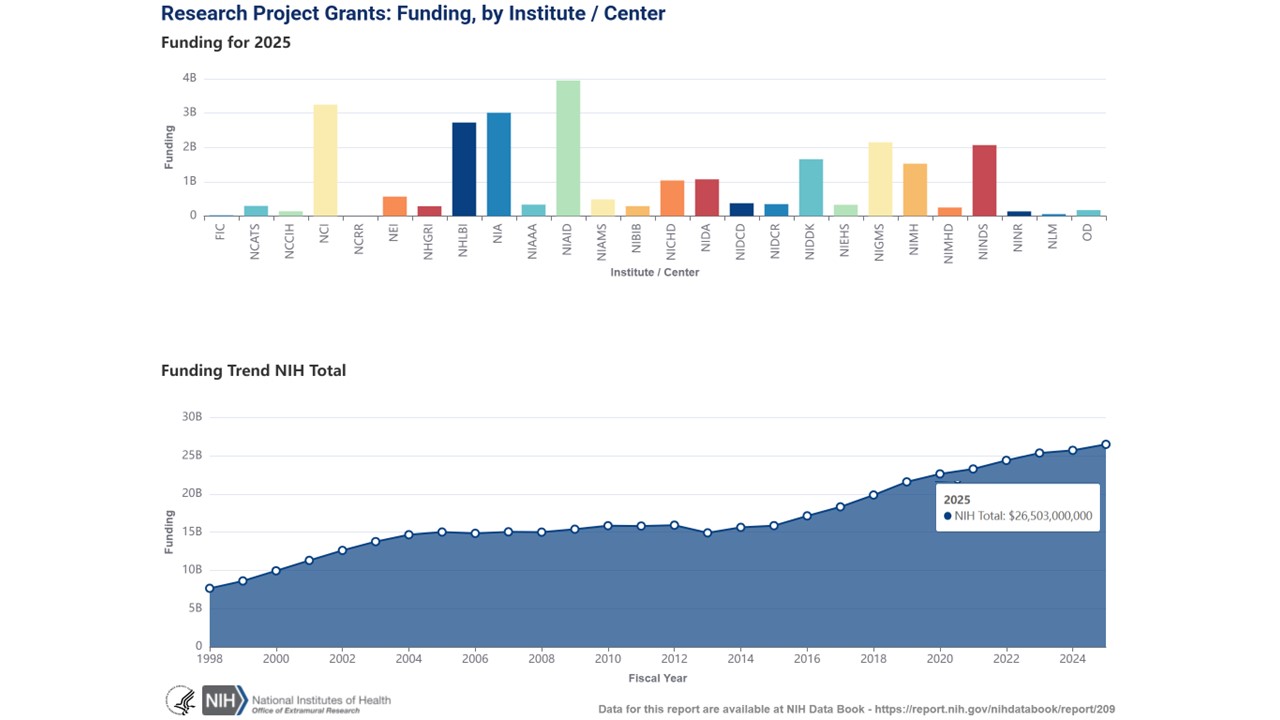
Figure 1. Chart on Research Project Grant funding by IC, highlighting that NIH awarded more than $26.5 billion in Research Project Grants in FY 2025.
The graph showing research grant funding by mechanism indicates that in FY 2025, Small Business Innovation Research/Small Business Technology Transfer (SBIR/STTR) awards totaled approximately $1.2 billion. The total funding for research grants—including Research Project, Research Center, Research Career, and SBIR/STTR grants—rose from its FY 2024 level (Figure 2).
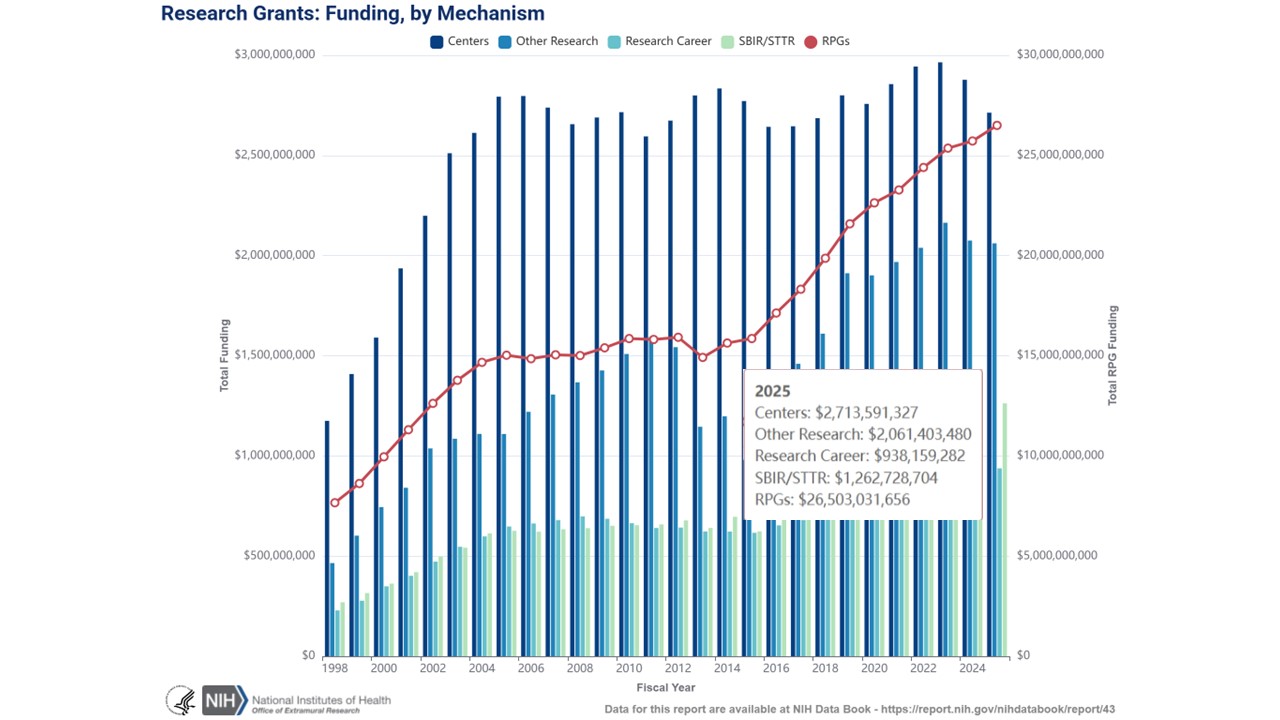
Figure 2. Chart on research grant funding by mechanism, highlighting FY 2025 funding levels for Research Project, Research Center, Research Career, and SBIR/STTR grants, and other research grants.
The graph, “Peer Reviewers, by Fiscal Year and Type of Review,” shows that NIH engaged more than 31,000 volunteer peer reviewers in the review of grant applications submitted to NIH in FY 2025 (Figure 3).
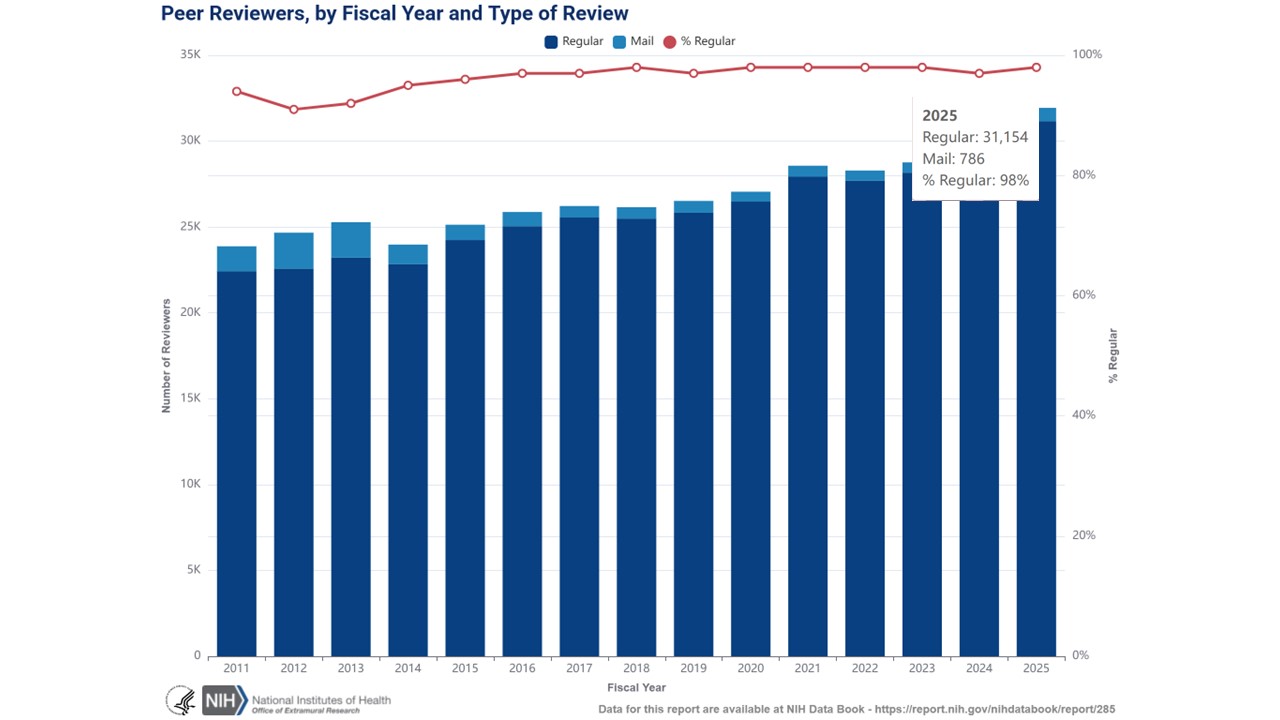
Figure 3. Chart showing the number of NIH peer reviewers by fiscal year and type of review, highlighting that in FY 2025, NIH engaged more than 31,000 reviewers.
Across the Data Book, dashboards allow users to export charts as images or data files. Individual charts can be shared via links, and archived versions remain available for historical reference.
We encourage the NIH biomedical research community to revisit the NIH Data Book as FY 2025 updates continue to be made and to use it as a starting point for exploring NIH programs and funding trends, as well as workforce data.
Related Resources:
- March 2026 Nexus article “Fiscal Year 2025 By the Numbers: Extramural Grant Investments in Research”
- February 2026 NIH Funding Blog “NIH Support for Early-Stage Investigators in FYs 2024 and 2025”